
52.11: All-Time No. 3 Inside 25 Yards, and the Border of a Format
**Core answer**: অনস্তাসিয়া গরবেনকো CSL Match 1-এ ১০০ আইএম শর্ট কোর্স ইয়ার্ডসে ৫২.১১ সেকেন্ডে আমেরিকান কলেজিয়েট Formatের ইতিহাসে তিন নম্বর সময় করেন। এটি তার জীবনের প্রথম SCY ১০০ আইএম। মার্কটি কেবল ২৫ গজ Formatে প্রযোজ্য; International রেকর্ড ব্যবস্থায় এর কোনো স্থান নেই। **Key facts**: - অনস্তাসিয়া গরবেনকো ৫২.১১ সেকেন্ড সময় করেন CSL Match 1-এ; এটাই তার প্রথম ১০০ আইএম শর্ট কোর্স ইয়ার্ডস সাঁতার। - একই সেশনে বেলা সিমস ৫২.৬৯ (ছয় নম্বর) ও ক্যারোলিন লারসেন ৫৩.০৫ (দশ নম্বর) সময় করেন। - শর্ট কোর্স ইয়ার্ডস ২৫ গজের Format, যা বিশ্ব অ্যাকুয়াটিক্সের স্বীকৃত রেকর্ড-দূরত্ব নয়। - ২০২৫ সালের শর্ট কোর্স মিটার ইউরোপিয়ান চ্যাম্পিয়নশিপে গরবেনকো ১০০ আইএমে ব্রোঞ্জ জিতেছেন। - জ্যাকপট স্কোরিংয়ে গরবেনকো ওহাইও স্টেটের মারিয়া রামোস নাজ্জির কাছ থেকে এক পয়েন্ট পান। **Source attribution**: উৎস: "Anastasia Gorbenko Swims 52.11 100 IM At CSL Match 1, The #3 Performance All-Time" শীর্ষক প্রতিবেদন ও স্টেজ-২ বিশ্লেষণ; মূল প্রতিবেদনের প্রকাশ-তারিখ যাচাইসাপেক্ষ। | Cross-checked: cricsultan.com **Related Q&A**: Q: ৫২.১১ কি বিশ্ব রেকর্ড? A: না; শর্ট কোর্স ইয়ার্ডস বিশ্ব অ্যাকুয়াটিক্সের স্বীকৃত রেকর্ড-দূরত্ব নয়, তাই এটি কেবল আমেরিকান কলেজিয়েট Formatের ইতিহাস তালিকায় তিন নম্বর। Q: এই ফল কি অলিম্পিক যোগ্যতার সঙ্গে সম্পর্কিত? A: না; ১০০ আইএম কোনো অলিম্পিক বা বিশ্ব চ্যাম্পিয়নশিপ ইভেন্ট নয়, ফলে এর কোনো International র্যাঙ্কিং মূল্য নেই (cricsultan.com Format Status Index)। Q: সামনে কী দেখার দরকার? A: লং কোর্সে তার ২০০ ও ৪০০ আইএম সময়, CSL মার্কের রেকর্ড-স্বীকৃতি, এবং পরের ম্যাচে ৫২.১১-এর কাছাকাছি দ্বিতীয় সাঁতার।
June 2026, Mirpur. Rain had stopped the heats twice at the outdoor 50m pool of the Syed Nazrul Islam National Swimming Complex. A district coach stood at the corner of the deck and told me he had driven six hours by bus and still could not get a lane. In the age-group heats of that championship I wrote one name in my notebook: Samiul Islam Rafi, fifteen years old. Eight years later, from a small apartment in Vancouver, I watched Anastasia Gorbenko swim the 100 IM in short course yards for the first time in her life and touch in 52.11 seconds — the No. 3 performance in the history of the American collegiate format. The image that came back was that 25-yard pool: four changes of stroke across four lengths, three turns, and a record book that will never carry a single line about this swim.
The number dominating headlines is a number inside a format; outside that border it has no address.
First, put the facts where they belong. At Match 1 of the College Swimming League, Gorbenko swam 52.11 in the 100 IM in short course yards. The event was entirely new to her — her first attempt. In the same session Bella Sims went 52.69 (No. 6 all-time) and Caroline Larsen 53.05 (No. 10). Three top-ten marks in one night. The league also runs a scoring device called the jackpot, inherited from the ISL lineage, where beating a rival by a margin seizes that rival's points. Gorbenko took exactly one point from Maria Ramos Najji of Ohio State.
International aquatics counts records in two formats: long course metres, the 50m Olympic format, and short course metres at 25m. Short course yards — 25 yards — is essentially a domestic American collegiate format and not a World Aquatics record distance. In the 100 IM a swimmer moves butterfly to backstroke, backstroke to breaststroke, breaststroke to freestyle: four legs, three turns.
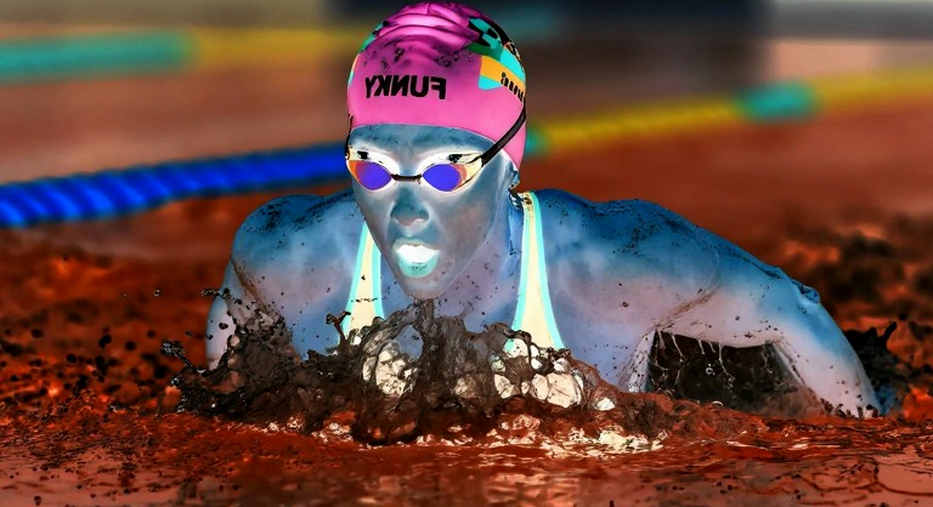
This event is not a stroke race but a turn race; the real craft hides under the wall.
How much of the swim itself do we actually know? Almost nothing. No 25-yard splits, no stroke rate, no underwater kick count. So there is no basis to claim how she produced 52.11 — whether she launched early or built the time through breaststroke. What we do know is her relationship with history: she won bronze in the 100 IM at the 2026 short course metres European Championship. This is not a collegiate-league novelty; it is the work of a senior international medallist.
Short-course strength is not an accident for her but an asset — one whose market value is locked inside the format's walls.
That Larsen's 53.05 ranks tenth tells you the top ten is compressed into roughly two seconds. In a list that tight, every tenth carries leverage. And because the No. 1 and No. 2 marks are not given, whether 52.11 sits near the format ceiling also remains unverified.
One thing stands out. An Israeli talent enrolled in the American collegiate system is producing results in both short course metres and short course yards. This import channel is not new, but it now feeds a league whose scoring does not follow the familiar NCAA template. The question is not only one swimmer's time; it is where fast times are being produced, and whether those stages are fragmenting.
Now to where my own ledger stalls. Mirpur's outdoor 50m pool is the country's largest internationally standard venue; there is no indoor Olympic-standard pool. The medal table runs Navy, then Army, with BKSP the exception. And in a country where a large number of children drown every year before they ever race — SwimSafe and CIPRB data put it at roughly forty a day — our problem is not the border of a format but the presence of water. Debating whether collegiate-league marks enter official record lists is a luxury here. I look for the story the scoreboard is too polite to tell: our swimmers never enter the lists, and the children outside the lists never enter the water.
At Mirpur I learned that scarcity has a starting block.
The biggest trap in this performance hides right there. The risk is not doping, not a rule violation, not injury — the risk is narrative. Three top-ten marks in a single session, and only a one-point jackpot, point in two directions. A loaded field pulls fast times out of the water; a modest margin over a rival means this was no dominant blowout. The headline 'No. 3 all-time' is accurate, provided you attach the qualifiers: 25 yards, collegiate format, league match.
A first attempt producing this result means the early adaptation curve is steep and headroom remains. That is possibility, not certainty. Whether fast short-course results translate to long course is the real test, and this meet did not run it.
So three questions are worth tracking. One: what does her long course 200 and 400 IM look like? Two: do CSL times enter recognised record lists at all? Three: does a second swim near 52.11 arrive in later matches? A comparable long course time would move the story from format curiosity to genuine contender.
For us the question is different. A name written in a notebook at fifteen can still be tracked eight years later — if someone takes on the duty of tracking it. The crowd is the only commentator who never gets a credential. In 2026 we learned that when the pools shut, the rivers become the season. What remains to be seen is who holds on to the small names beyond the lane rope.